What is Open edX?
In short
Open edX is a free, open-source learning management system (LMS) originally built by Harvard and MIT to run edx.org. Universities, companies, governments and NGOs use it to create, deliver and certify online courses for audiences of any size, from a few hundred learners to millions. It can be installed on your own infrastructure or run by a managed provider.
Brief history and origin
The learning platform that runs Open edX was originally developed in 2012 by Harvard and MIT for their MOOC initiative: edx.org. In this portal, students from all over the world were able to access world-class courses and learning programs delivered online from the most recognized universities and organizations in the world. edX Inc, the non-profit in charge of this initiative, was established as the curator and gatekeeper of the course portfolio. Due to the expansion of video and broadband access around the world, along with mobile devices, these Massive Open Online Courses rapidly became a huge success.
Purpose and vision
edX's mission was to improve access to education all around the world, and its initiatives went beyond the edx.org portfolio. As more and more universities and organizations asked to publish their own courses, in 2013 edX decided to open the source code of the learning platform so that anyone could deliver online courses with their own curation criteria and without any gatekeeper. This is the moment when Open edX was born, as an open-source LMS under the GNU Affero General Public License version 3.
Along with this milestone, the Open edX community was born, with people from all parts of the globe. Not only individuals but also service providers such as Aulasneo started contributing to the open-source project.
In 2021, edx.org was acquired by 2U. Harvard and MIT used the proceeds to create Axim Collaborative, a non-profit that now stewards the Open edX project and its community. That is why today edX and Open edX are different things: edX is a course marketplace, while Open edX is the platform you can run for your own organization.
How Open edX works
Open edX is not a single application but a set of services that work together. Knowing its main pieces helps to understand what it can do and what it takes to run it:
LMS: the learner experience
The Learning Management System is where learners sign up, take courses, watch videos, answer assessments, participate in discussions, track their progress and earn certificates.
Studio: course authoring
Studio is the authoring tool where instructors and course teams build courses in sections, subsections and units, schedule releases and define grading policies. See our tips to elevate your course design in Open edX Studio.
XBlocks: the building blocks of every course
Every component in a course (a video, a problem, an HTML page, a drag-and-drop exercise) is an XBlock. New component types can be installed as plugins. Discover 10 advanced components to boost engagement.
Micro-frontends and mobile apps
The learner dashboard, course pages and authoring screens are built as React micro-frontends that can be branded and customized independently. Learners can also use the Open edX mobile apps for iOS and Android.
Tutor: the official distribution
Tutor is the community-supported way to install, configure and upgrade Open edX with Docker, either on a single server or on Kubernetes. Learn about the Open edX installation options.
Named releases every six months
The community ships a new release every June and December, named alphabetically after trees: Redwood, Sumac, Teak, Ulmo… Use our Open edX release notes explorer to see everything that changed since your version.
Key features of Open edX
Before diving into the key features of the Open edX platform, let's briefly explain what an LMS, or Learning Management System, is. An LMS is a software platform designed to manage and organize courses for students. It enables students to access learning content in various formats and includes assessments to test their knowledge and comprehension. Upon meeting the evaluation criteria for each course, the LMS generates a certificate of completion. Read more in Learning management system: what is it and why do I need one?
Now, let's see the key features of the Open edX LMS.
Scalability and flexibility
The platform's architecture is designed to manage thousands of simultaneous users without compromising performance. Achieving this was a crucial goal during development, as edx.org had to serve learners from all over the world. The platform not only scales up to handle high demand but also scales down during periods of lower usage, making it both flexible and cost-effective.
Learner-centric design
Originally developed by Harvard and MIT, two of the world's most recognized universities, the Open edX platform was designed with a learner-centric approach. Both the user interface (UI) and user experience (UX) are crafted to facilitate the online learning experience, effectively addressing and overcoming typical challenges associated with online education.
Customizable learning experiences
A key premise during the design stage was to create an open platform adaptable to various use cases. This deliberate choice led to the software being built with a modular approach, incorporating extensions and multiple integration options. This design allows for the expansion of features by including external resources and supports the development of new features or components within the learning platform. Learn how to approach LMS customization.
Rich content and assessments
Courses combine video, text, problems of many kinds (multiple choice, numerical input, drag and drop, code graders), open responses with peer and staff assessment, timed exams and proctoring integrations. Grading policies are defined per course, and learners can always see their progress.
Certificates and credentials
Open edX issues certificates when learners meet the passing criteria, with your own design and signatures. It can also issue verifiable digital credentials, and supports programs that group several courses.
Robust analytics and reporting
The platform provides analytics and reporting tools to track learner progress, measure course effectiveness and improve educational outcomes. For deeper insights, Panorama brings customizable dashboards for staff and learners and can combine Open edX data with other systems. Read how analytics help measure the impact of open courses.
Benefits of using Open edX
Now let's discover the benefits of using the Open edX platform as the LMS for your organization.
Accessibility and inclusivity
Open edX adheres to global accessibility standards such as WCAG (Web Content Accessibility Guidelines), ensuring that the platform is usable by individuals with disabilities. It works with screen readers, supports keyboard navigation for users who can't use a mouse, and lets users adjust text size, contrast and other display settings.
Inclusivity is another key strength. The platform offers multilingual support, so learners from diverse linguistic backgrounds can access courses in their preferred language. It supports various content formats, including videos, text, quizzes and interactive simulations, catering to different learning styles. Discussion forums, peer reviews and collaborative projects foster a sense of community where all learners can participate.
Cost-effectiveness
As an open-source platform, Open edX eliminates licensing fees, and you can access and modify the software freely. Its scalable architecture ensures that resources are used efficiently, accommodating thousands of users without compromising performance, and it integrates with external tools without requiring proprietary solutions. See what a fully managed Open edX costs.
Ownership of your platform and your data
With Open edX, the platform, the content and the learner data belong to your organization. There is no vendor lock-in: you can move between hosting providers or bring the platform in-house at any time.
Community support and resources
Open edX is backed by a vibrant global community of developers, educators, service providers (such as us at Aulasneo!) and enthusiasts who continuously contribute to its improvement and innovation. Users have access to documentation, tutorials, forums and Slack channels, and to regular community events such as the Open edX Conference, webinars and meetups.
Integration with other tools and platforms
The platform's modular architecture allows for easy integration with third-party applications: learning analytics tools, content management systems, CRMs, single sign-on or communication platforms. Open edX supports standards such as LTI (Learning Tools Interoperability) and SCORM (Sharable Content Object Reference Model), and exposes REST APIs to connect it with the rest of your systems.
Ready for AI
Open edX's open architecture makes it possible to bring AI into the learning experience on your own terms. For example, Owly, our AI agent for LMS, assists learners and course teams right inside Open edX.
Use cases of Open edX
The Open edX platform, with its robust features and flexible architecture, serves a diverse range of educational needs across various sectors. These are some of its primary use cases, with real examples from our clients.
MOOCs (Massive Open Online Courses)
Open edX is renowned for delivering MOOCs. Its ability to handle thousands of simultaneous users, its assessment tools and its community features make it perfect for large-scale educational initiatives. Institutions like Harvard and MIT have used it to offer courses that reach millions of learners worldwide. Learn how to design successful MOOCs, or see how The Health Hive built a free, open-access learning platform.
Corporate training and development
Open edX's modular design allows companies to tailor content to specific skill sets and roles, and to integrate the platform with existing HR and management systems. Analytics help measure the effectiveness of training. See how Holcim Academy shares sustainable construction knowledge with professionals worldwide.
K-12 and higher education
For K-12, Open edX supports blended learning, combining online resources with classroom instruction. Universities use it to offer online courses and degree programs with flexible learning options. Read more about Open edX for universities and how ICdeBA moved its training online without losing the academic year.
Professional certification programs
Governments and NGOs
Open edX helps non-profits and public organizations reach large audiences without geographical barriers. See how Cap-Net UNDP runs its global capacity-building campus, and why an LMS is key for NGOs.
Getting started with Open edX
Starting with Open edX can seem daunting, but with the right resources and guidance you can leverage this powerful platform to meet your educational needs. The first step is to understand your specific requirements (audience, number of learners, integrations, branding) and how Open edX can address them. Then, choose how to run it.
Setting up your own Open edX instance
Installing Open edX on your own servers or cloud account with Tutor gives you full control over the platform's features and customization options. It requires technical expertise in Linux, Docker and, at scale, Kubernetes and managed databases, plus the time to apply security updates and upgrade to a new release every six months. Read our tips for running Kubernetes in production and the lessons learned from a nine-release migration.
Choosing a managed Open edX provider
Open edX hosting providers handle the setup, maintenance, upgrades and scaling of the platform. This is ideal for organizations that want to focus on content creation and learner engagement without worrying about the underlying infrastructure. Aulasneo offers fully managed Open edX plans with setup in 24 hours.
Community and support resources
The Open edX community is a valuable resource for anyone getting started with the platform. You can access the official documentation and forums, connect via Slack, attend community events and participate in working groups to get help and share your experiences.
The future of online learning with Open edX
Open edX is a live platform that evolves continuously, adding new features, removing old and unused ones, and releasing a new version every six months to keep up with the evolution of the modern software stack. Recent releases have modernized the authoring experience, the learner interfaces and analytics.
As AI becomes part of everyday learning, an open platform lets each organization decide how to adopt it: which models to use, where learner data lives and how to measure the results. With ongoing contributions from its global community, Open edX is well positioned to remain at the forefront of online education.
Frequently asked questions
Is Open edX free?
Yes. The Open edX software is free and open source under the AGPL v3 license, with no per-user or license fees. Running it does have costs: cloud infrastructure, installation, upgrades, security and support, whether your own team handles them or a managed provider does.
Is Open edX the same as edX?
No. edX (edx.org) is a course marketplace owned by 2U. Open edX is the open-source platform originally built to power edX, which any organization can run on its own, with its own brand, content and learner data.
Who maintains Open edX?
Open edX is stewarded by Axim Collaborative, a non-profit founded by Harvard and MIT, and developed by a global community of individual contributors, universities and service providers such as Aulasneo.
How often is Open edX updated?
The community publishes a named release every six months, in June and December, named alphabetically after trees (Redwood, Sumac, Teak, Ulmo…). Each release brings new features and security updates.
What technology is Open edX built on?
The backend is written in Python with the Django framework, and the learner and authoring interfaces are React micro-frontends. Tutor, the official distribution, installs it with Docker on a single server or on Kubernetes.
Does Open edX support SCORM and LTI?
Yes. Open edX can act as an LTI 1.3 tool and as an LTI consumer, and SCORM packages can be added to courses through an XBlock, so you can reuse existing content and connect external tools.
Can I use Open edX without a technical team?
Yes, through a managed Open edX provider. The provider hosts, upgrades, secures and supports the platform, and your team focuses on courses and learners. Aulasneo can have a managed Open edX site running in 24 hours.
More answers in our Open edX FAQ.
Conclusion
Open edX stands out as a versatile and powerful platform for online education. Its scalability, learner-centric design, cost-effectiveness and extensive integration capabilities make it valuable for educators, corporations and institutions alike, and its community ensures that it keeps evolving.
At Aulasneo, we are experts with more than 10 years of experience across various use cases and scales, providing hosting, customization and advanced services. You don't need to embark on this initiative alone. Contact us and let's talk about your project: we will provide the guidance and support you need to make your Open edX implementation a success.
Related success stories
ICdeBA
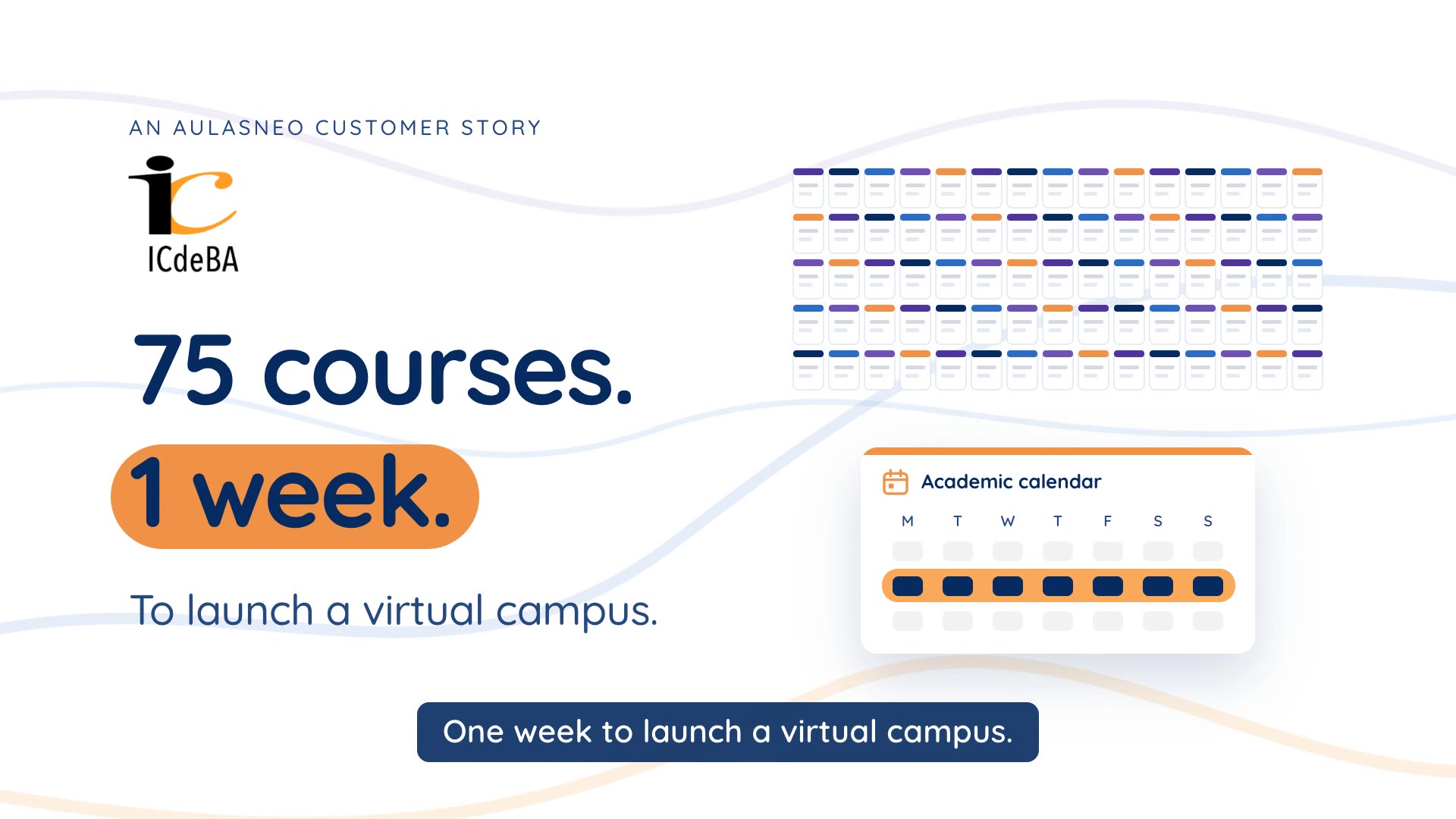
ICdeBA: 75 courses. One week.
When lockdown closed classrooms in March 2020, ICdeBA needed to bring its psychoanalytic training online without losing the academic year. Working with Aulasneo, it launched a virtual campus with all 75 of its courses in one week, and built a foundation for continued growth.
Read the story →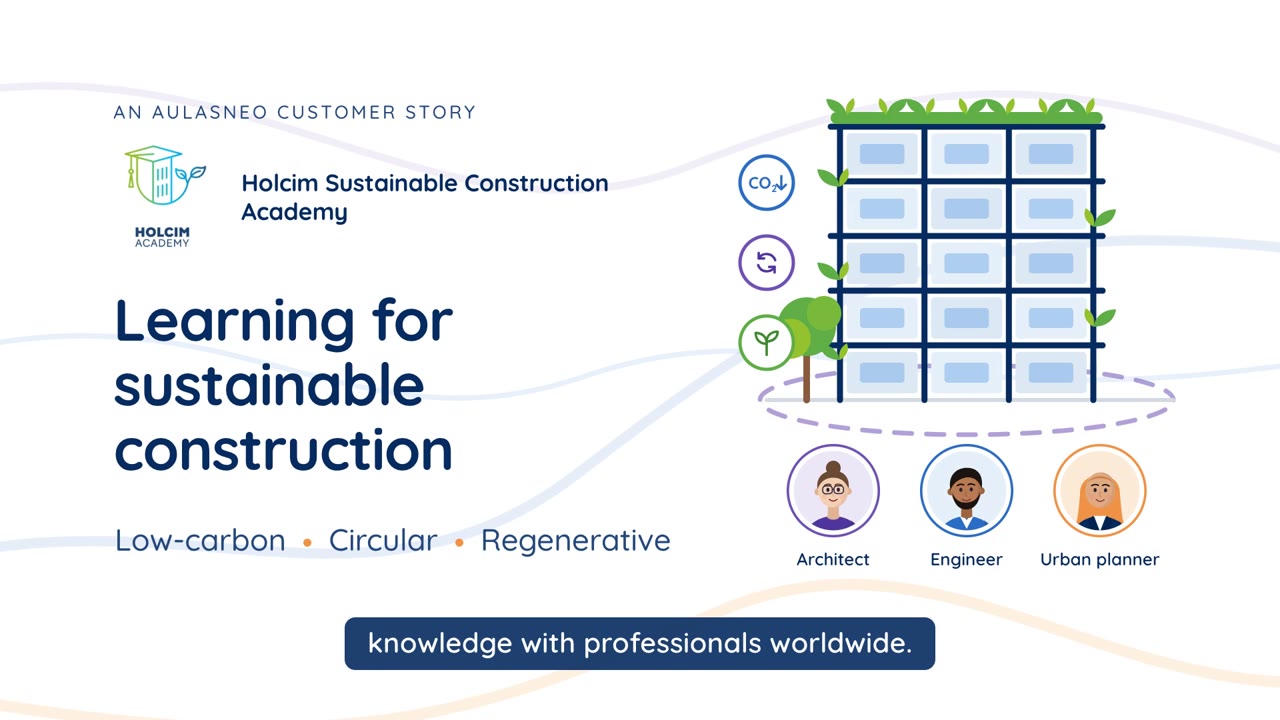
Holcim Academy
Holcim Academy: one platform, two audiences
Holcim, the Swiss building materials leader, wanted to share sustainable construction knowledge with professionals worldwide. Aulasneo built and runs the Holcim Sustainable Construction Academy on a managed Open edX platform that serves external professionals and Holcim employees in one place.
Read the story →