A new calendar year begins—and with it come the familiar New Year’s resolutions.
In the Southern Hemisphere, it’s summer vacation time: a pause that allows many people to slow down and disconnect from everyday routines. In the Northern Hemisphere, the break around Christmas and New Year also creates—if only briefly—a space for reflection outside the constant rush of daily work.
This is usually when people set personal goals: exercising more, improving nutrition, reading more, spending quality time with family. But it’s also a valuable moment to step back from day-to-day operations, zoom out, and begin sketching new goals for the organizations we’re part of.
And the year 2026 begins under particularly challenging conditions—perhaps more so than any year in recent decades.
We’re living through a period marked by geopolitical initiatives that break with diplomatic agreements and practices in place since World War II; by global economic shocks whose impact is no longer limited to developing countries, but increasingly affects developed economies as well—economies long accustomed to predictability and a balance of power that now seems far less stable.
On top of these geopolitical and economic shifts—tariffs, embargoes, military interventions that challenge international rule of law—we’re witnessing an accelerated technological transformation, with a rare bird at the center of the conversation: Artificial Intelligence.
Many respected technologists and industry leaders predict a radical transformation of work (and its social consequences), comparing AI’s impact to the Industrial Revolution or to the way the internet reshaped information distribution.
Yet these forecasts often collide with the realities of everyday organizational life—with microeconomics and with how companies actually operate.
Rather than bringing clarity, AI promises frequently add anxiety and FOMO for leaders across industries. Organizations heavily reliant on technology fear becoming obsolete overnight if they don’t “jump on the AI wave” immediately.
This idea of “surfing the AI wave” reminds me of Vermeer’s pictorial style: chiaroscuro. There is light—but there are also shadows.

The light
On the bright side, AI is an extraordinarily powerful tool. It accelerates tasks, enables new forms of search and research (with ongoing challenges around bias and source reliability), simplifies development, and acts as a catalyst for everything from routine operations to creative work.
The shadows
But there are shadows as well—and many of them are rooted in AI’s microeconomics.
The major AI powers—the private companies developing foundational models (LLMs)—are still in an early stage of maturity. Despite generating billions of dollars in revenue, many continue to spend more than they earn.
This isn’t accidental. AI remains an emerging technology. The capital investments required to train and operate foundational models are enormous, and all signs point toward a future dominated by a small number of very large players.
As with many technological shifts, these companies are doing whatever it takes to cross the adoption chasm. Operating at a loss for years—or even decades—is not unusual in this context. Amazon and Coursera are well-known examples. This could imply that services currently offered at a loss may become significantly more expensive in the future, once vendor lock-in (dependency on a single provider) has been established.
So… what does this mean?
From our perspective, based on recent hands-on experience, this landscape has clear implications.
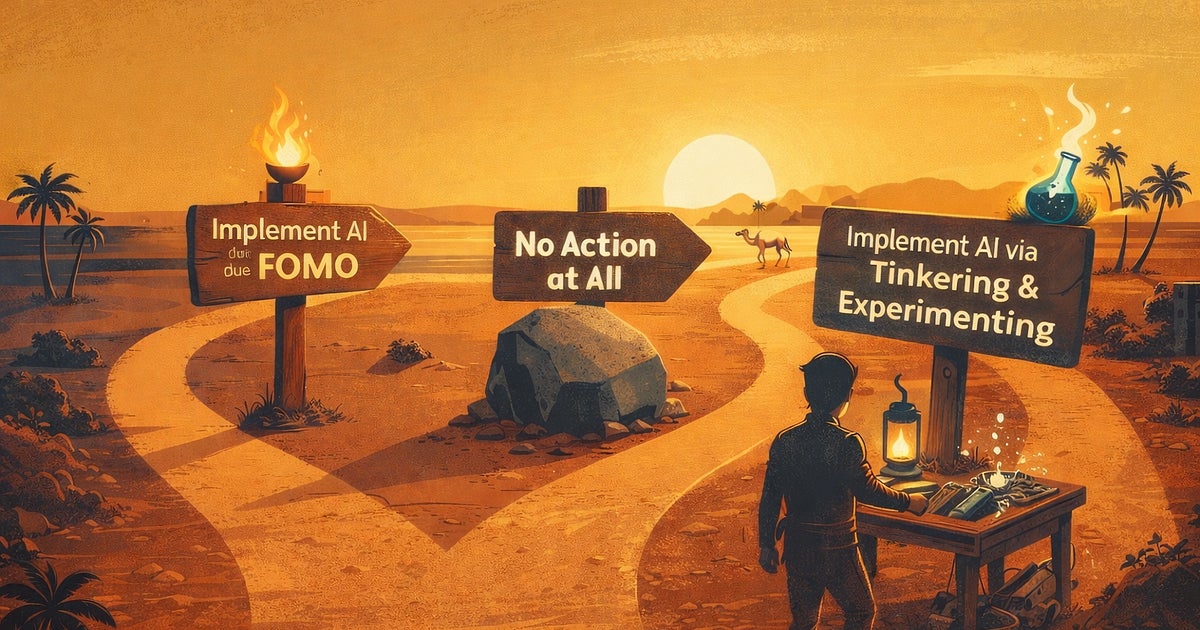
On one end of the spectrum, organizations that don’t pause to reflect risk making decisions that may quickly prove misguided. For example: “AI is still immature—we’ll wait until things settle.”
On the other extreme are those saying: “Let’s implement AI everywhere, right now,” often without a clear strategy or concrete objectives.
Caught between these extremes, many leaders feel disoriented—pressured by FOMO and faced with an all-or-nothing mindset.
A middle path
At Aulasneo, we advocate for a middle path.
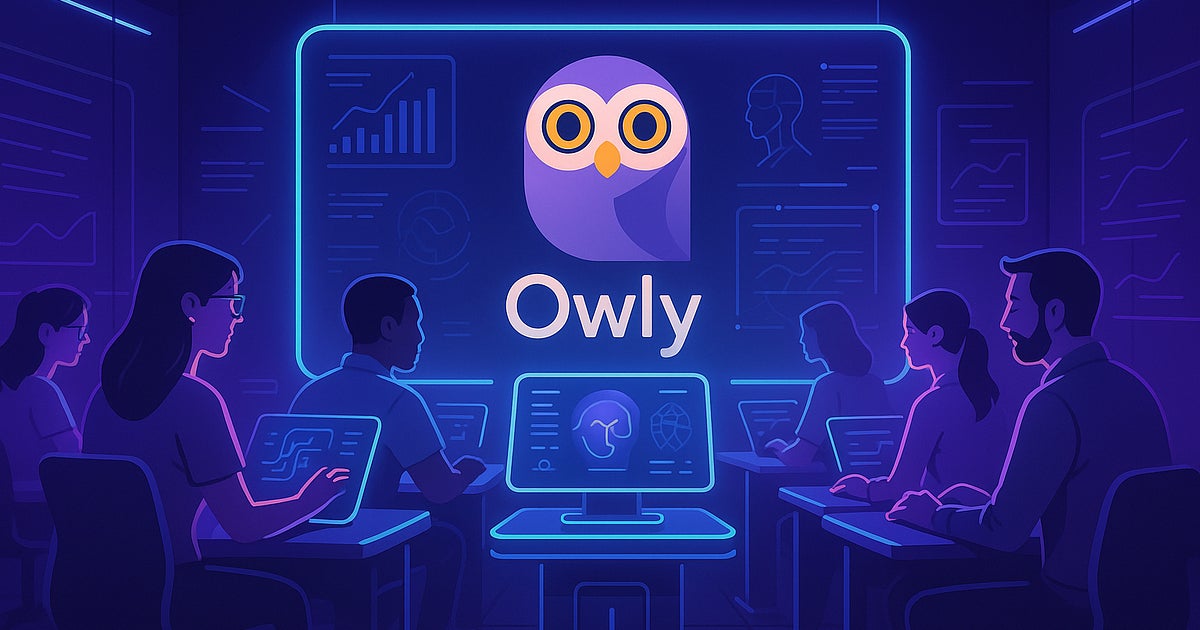
Our recent experience developing Owly, our AI agent for education, is a good illustration. Over the past six months, we’ve built a platform that allows organizations to experiment with AI in a controlled way—aligned with real organizational goals and under strict cost governance.
Rather than chasing magic solutions, we aim to provide a safe environment for tinkering: exploring practical, down-to-earth use cases that deliver tangible value and measurable improvements to organizational outcomes.
In the next edition of Spark Learning, we’ll share concrete examples—and begin opening a debate that’s already gaining traction:
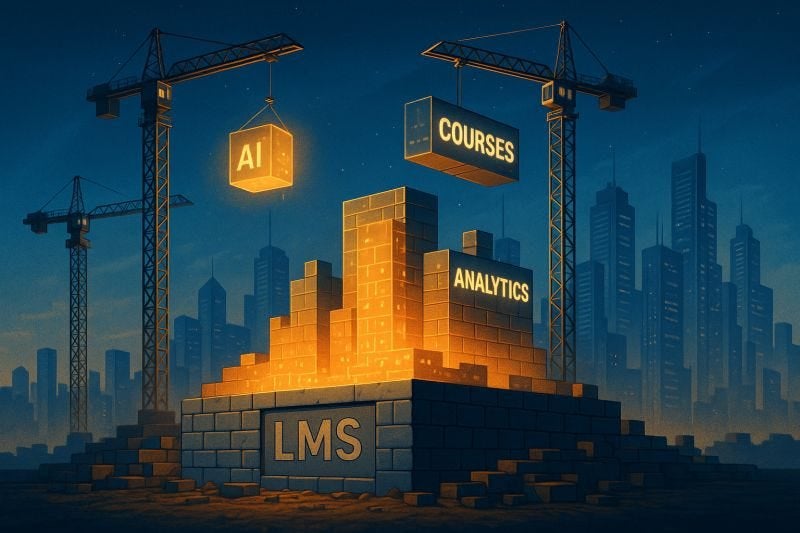
Will AI replace existing systems and platforms—such as LMSs in education—or will it fundamentally transform them from within?
💬 Join the conversation
What’s your current approach to AI?
Are you actively experimenting, waiting for maturity, or feeling the pressure to “jump in” quickly?
We’d love to hear your perspective—your experiences, doubts, and even your contradictions.
Write to us at info@aulasneo.com or share this article with someone navigating the same questions.
Let’s keep learning—together. 🚀